
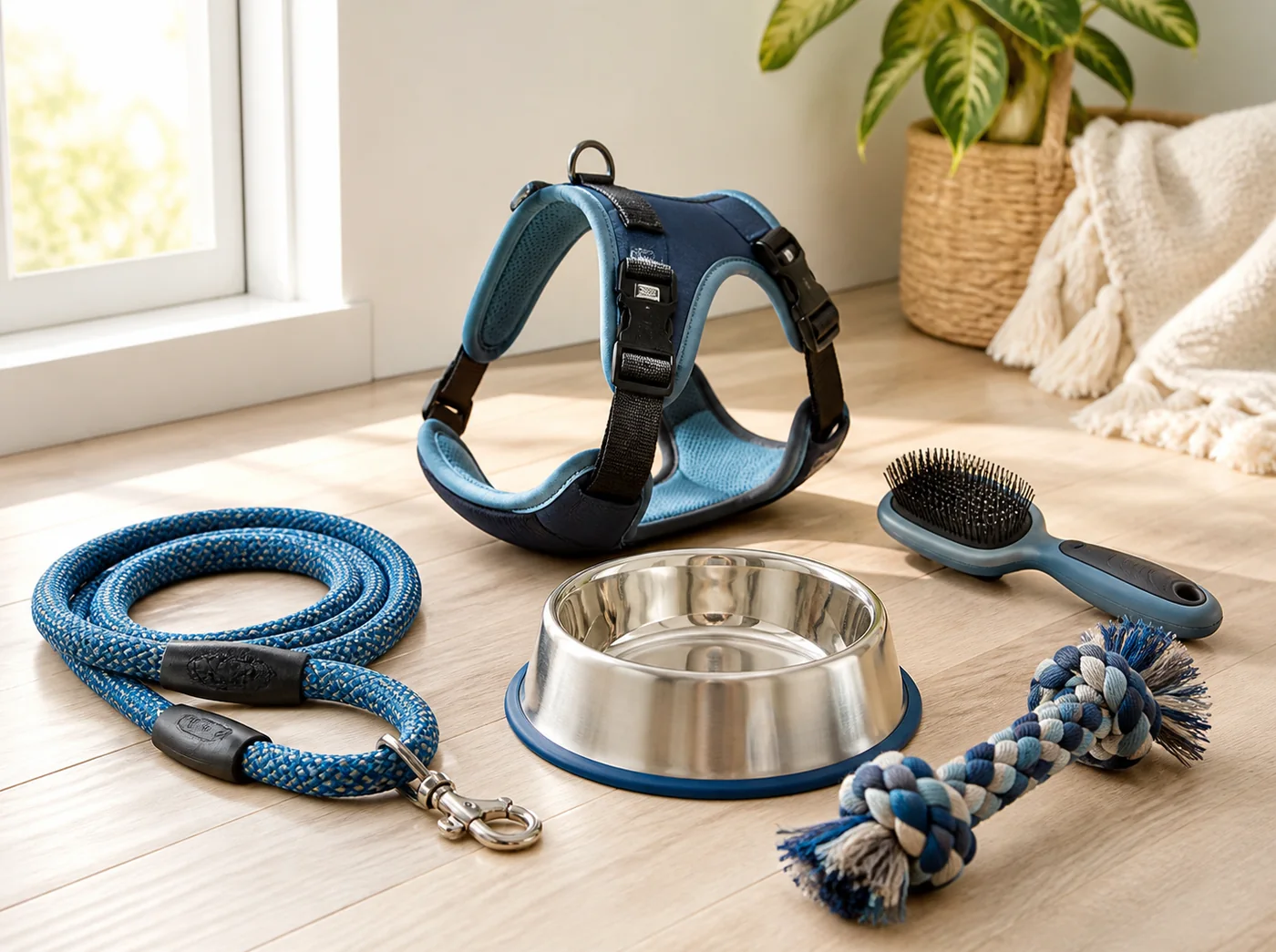
Pet supplies
Everyday pet items by size range, with the pack copy written for the destination market.
What we make for daily use
- Beds and mats
- Carriers
- Bowls and feeders
- Drinkers
- Collars, harnesses and leads
- Toys and chew items
- Grooming brushes and clippers
Written down before the pattern is cut
Size and load are the two figures the buyer reads standing in front of the shelf.
- What the quotation has to state
- Size range, material, weight the item must hold, colour set and packing quantity.
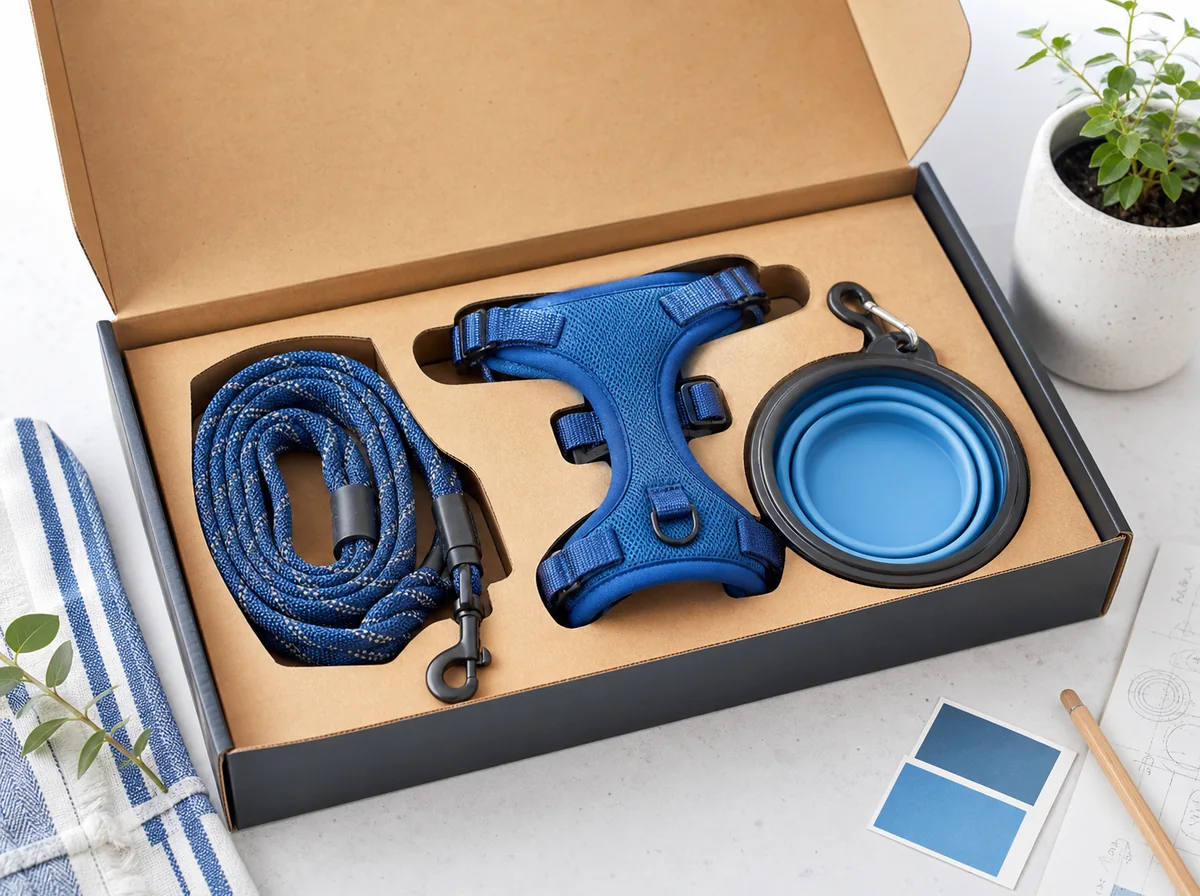
- The packaging that goes with it
- Header card with hang tab, printed belly band or a folding carton for the larger items.
- What the inspection measures
- Seam and stitch pull on textiles, load test on carriers and leads, and print legibility.
It is checked by pulling, not by looking
Seams and clips under load
What fails is the load. A seam or a clip that holds in the showroom lets go with an animal pulling on it, so this family is checked by pulling and not by looking. Second is the textile, which changes hand between batches if the supplier switches yarn.
Two sizes with real demand
Volume moves by size range. Every extra size is a separate pattern and a separate stock line, so the unit price falls faster by concentrating on two sizes with real demand than by covering the whole range.
What the buyer reads at the shelf
The pack has to state the size, the weight the item holds and the material, in the market language, because that is what the buyer compares standing in front of the shelf. The hang tab has to fit the fixture of the chain.
The other seven families
See the eight categories



Tell us the product and the target price
We reply with the sourcing plan, the packaging we propose and a quotation that can be compared.