

Eight product families we develop and supply
Every family below has its own factory base in Asia, its own inspection checklist and its own packaging language. Open a category to see what we develop in it and what the pack has to solve.
Choose the family and we take it from there
If the product is not in this list, ask anyway. The list is where we work every week, not a limit.
 Flow pack · canisterWet wipesBaby, cosmetic and surface wipes in flow pack, canister or lid format.
 Blister · gift setPersonal care itemsEveryday bathroom and grooming items sold by unit, in blister or in gift sets.
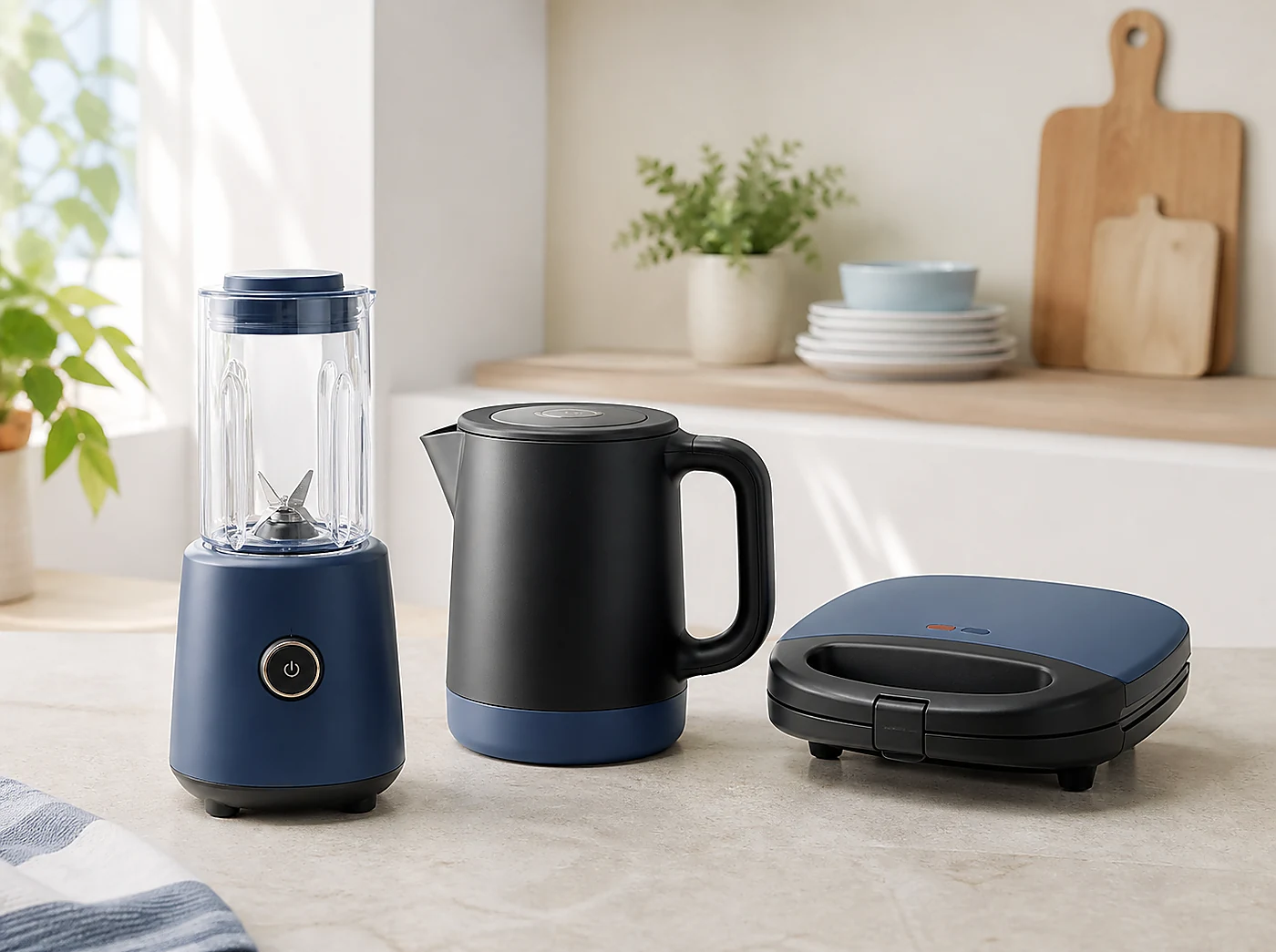 Retail box · insertHome appliancesSmall kitchen and household appliances built to the voltage and plug of the destination market.
 Moulded tray · barcodeConsumer electronicsAudio, power and mobile accessories, with your logo on the product and on the box.
 Sleeve · protected pieceHome decorDecorative pieces and seasonal lines, developed by colour range and by retail price point.
 Header card · hang tabPet suppliesEveryday pet items by size range, with the pack copy written for the destination market.
 Polybag · display shipperBack to schoolSeasonal school lines planned backwards from the date the shelf has to be full.
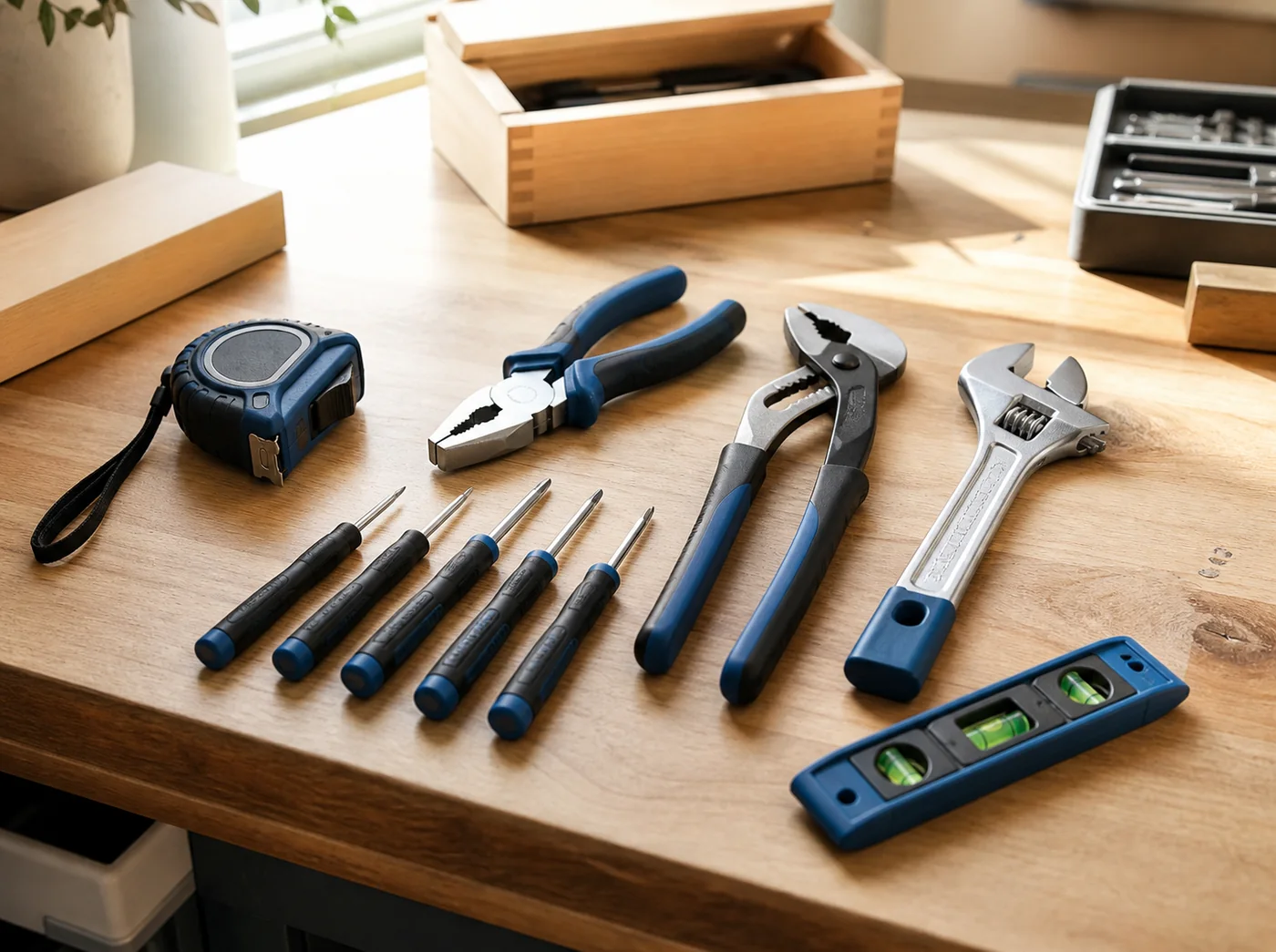 Case · die-cut insertHome and building toolsHand tools and home repair sets, assembled as the set the buyer actually sells.
The same method in every category
Categories differ in what breaks, not in how the order is run.
A factory base per family
We do not send a wipes enquiry to an appliance plant. Each family has its own shortlist and its own price ladder.
A checklist per family
What is measured on a kettle is not what is measured on a backpack. The checklist is written per category and per order.
A packaging language per family
Blister, folding carton, flow pack or a case with a die-cut insert. The format follows how the item is sold.
A calendar per season
School and festive lines are planned backwards from the shelf date. The rest are planned from the sailing date.
Reference figures a specification works with
These are standard market and packaging references, not figures about this company. They are the numbers a buyer and a factory argue over when a specification is written.
| What it measures | Usual reference | Why it matters to the order |
|---|---|---|
| Container volume | 33 m3 in a 20 ft, 67 m3 in a 40 ft | The carton size decides how many units fit, and that decides the freight cost per unit. |
| Export pallet | 1200 x 1000 mm and 1200 x 800 mm | A shipper that does not divide cleanly into the pallet wastes paid volume on every trip. |
| Corrugated flute | E flute 1.5 mm, B flute 3 mm, C flute 4 mm | Thicker board protects more and stacks worse. The choice follows the transit, not the taste. |
| Folding carton board | 250 to 350 g/m2 for most retail packs | Below that range the printed box loses its shape on the shelf after a week. |
| Destination electrical standard | 110 V or 220 V, at 50 Hz or 60 Hz | It changes the motor, the plug and the certification, so it is fixed before the quotation. |

Tell us the product and the target price
We reply with the sourcing plan, the packaging we propose and a quotation that can be compared.